


Unknown leaf damage

PolioLegsstarted grow question 3mo ago
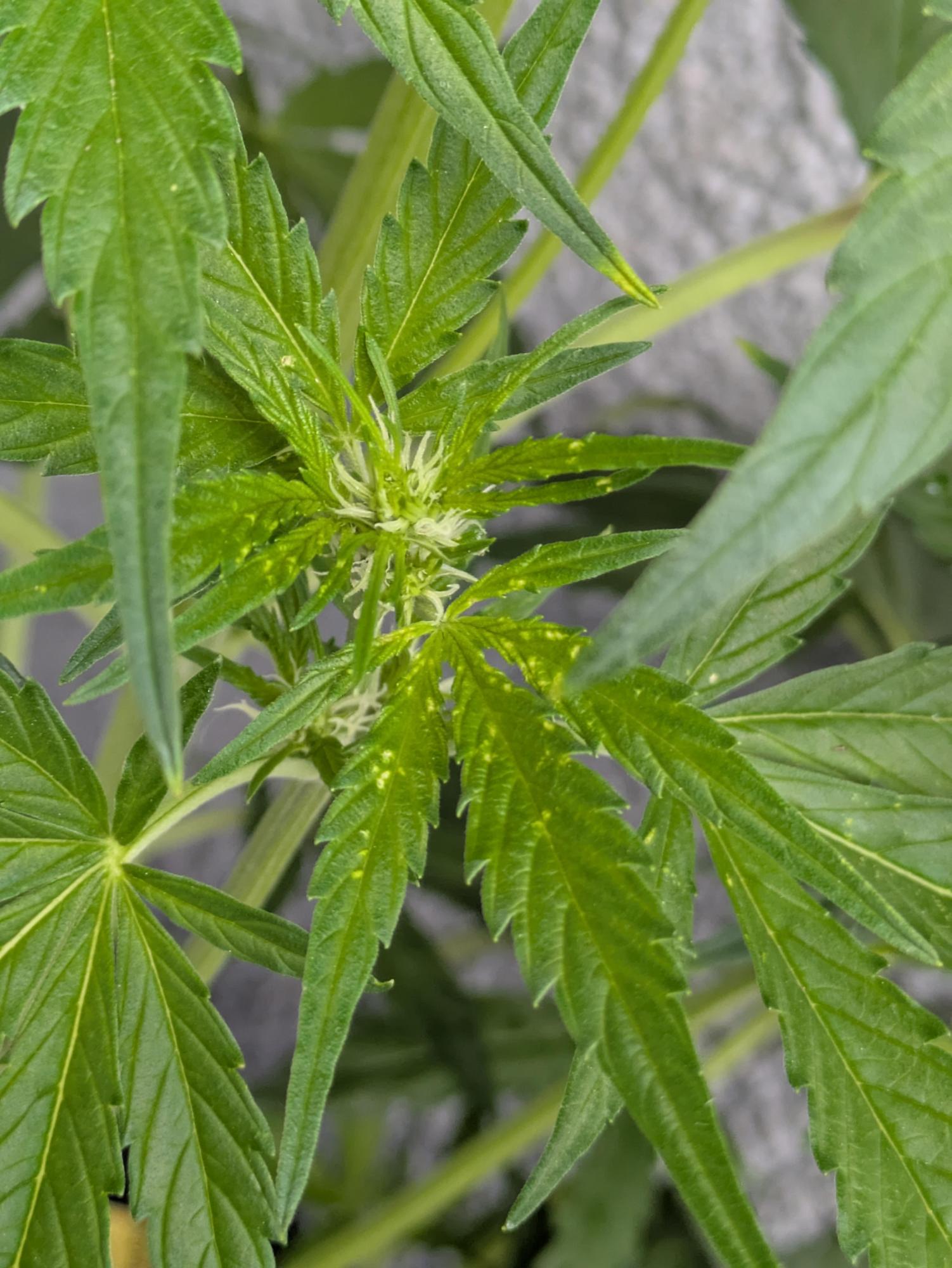
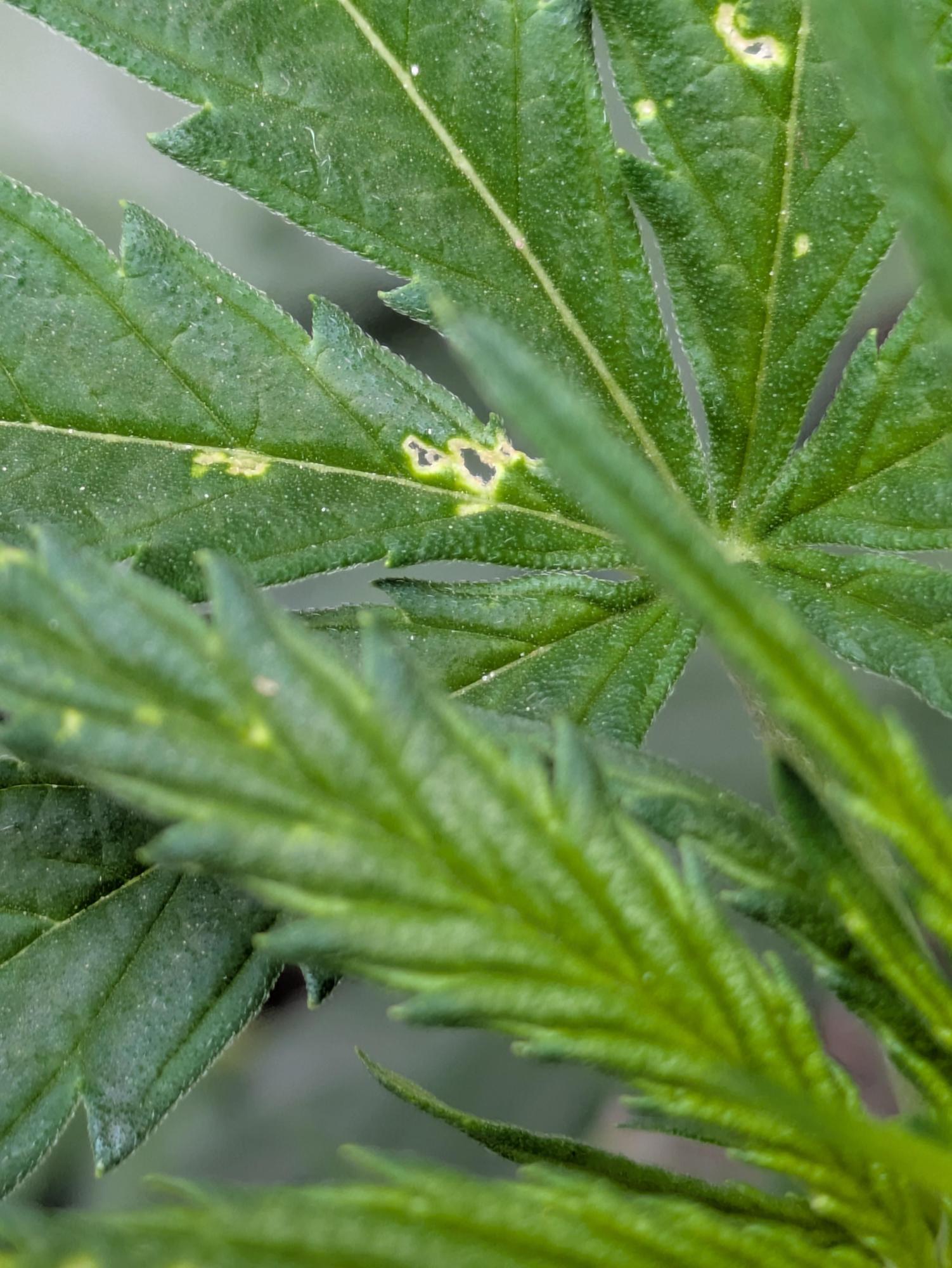
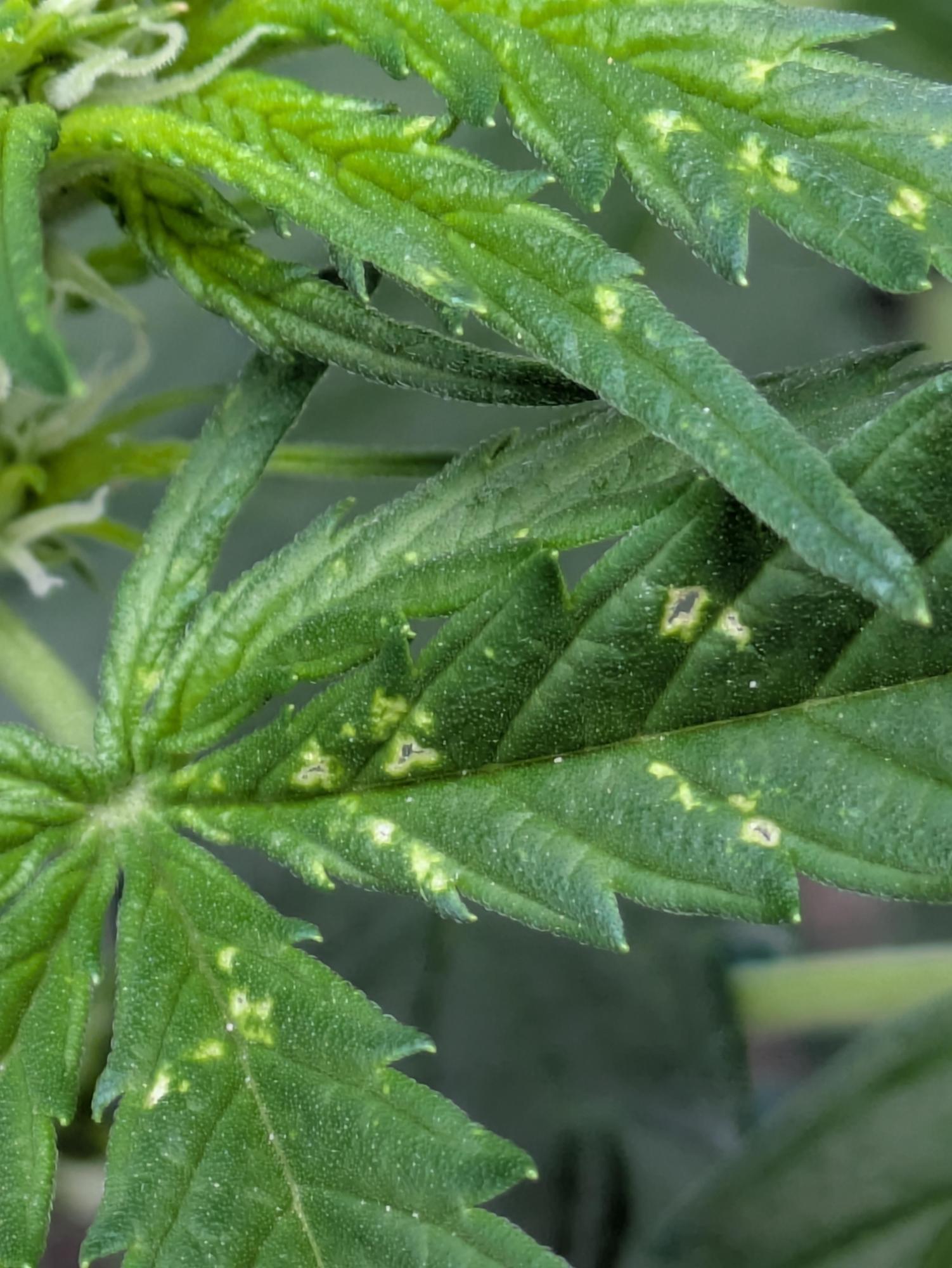
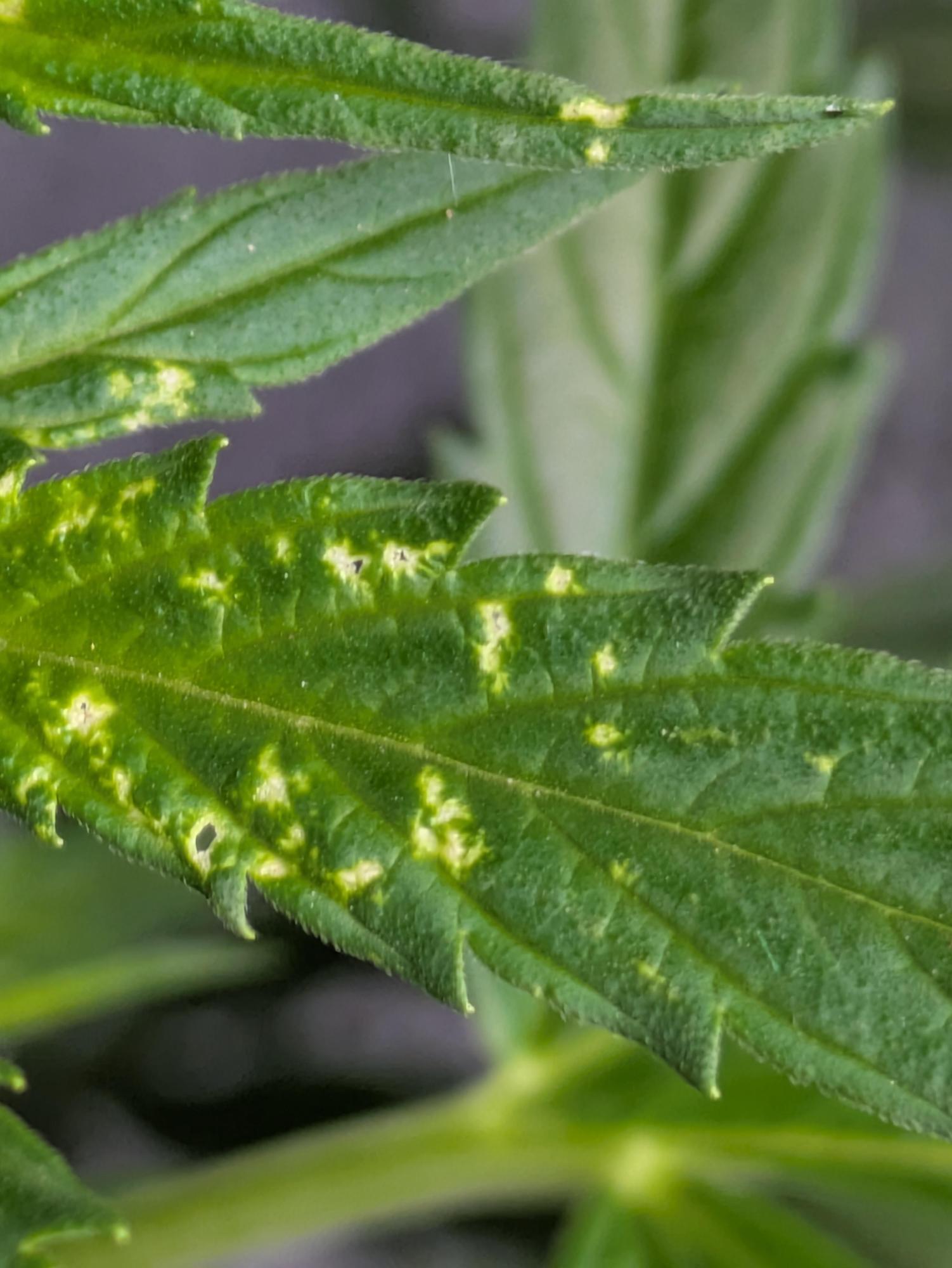
Any ideas on what could be causing this leaf damage? I'm growing outside so I suspected it's some kind of pest. However, it's only occurring on two of my six plants. The two it's occurring on are the same strain, so maybe its a genetic/environment thing instead? Thanks! 😎
Solved
Leaves. Other
1 like

Nocone_Purpleanswered grow question 3mo ago
That patchy yellowing and physical leaf tearing looks like typical outdoor pest damage from sucking insects like leafhoppers, thrips, or plant bugs. Certain strains have softer leaf tissue or specific terpene profiles that attract bugs much more than others, which explains why only that specific strain is affected. Check the undersides of the leaves and the stems early in the morning or at dusk to catch the culprits active.
Apply an organic treatment like Neem oil or insecticidal soap thoroughly during the late evening to avoid sun-burning the foliage.
Keep a close eye on the new growth to ensure the damage has stopped spreading after your treatment.

Organomananswered grow question 3mo ago
Bugs...........damage from some sort of "sap sucking" insect.
Definitely not a fungal/bacterial disease or caused by a nutrient deficiency or any sort of weird root problem.
2 likes
Complain
Similar Grow Questions
Solved

IndeKast
Wrinkled discolored leaves.Maybe someone can tell me what's going on with the leaves? They are a little bit wrinkled and discolored. Yesterday I repotted from a 1litre biobizz light mix to 6 litre all-mix. Maybe the repotting will fix the problem, but still I ask this question.
(Pics 5days ago and today)
Week 4
Leaves. Other
7y ago
9
6
Solved

Ghostguy1337
Normal seedling growth at day 5?I have posted a Day 5 picture to my diary - it seems to me the seedling is a slow grower, and the leaves are dark green. Does it seem like typical day 5 growth? I am wondering if the FFOF is a little too hot? A lot of other seedlings look to be a lighter shade of green.5y ago
3
3
Solved

WEEDOOR
GC auto developmentHow do they look? the color is ok? the shape of their growing?
I am worry about deficiency or efficiency of nutrients.
Thanks!!!
Leaves. Color · Yellow
Leaves. Other
Plant. Too short
5y ago
2
3
Solved

BeardedTree
This seemed to pop up in the past day or so. Little brown spots on my lower fan leaves.
Nutes splashing on them? Cal mag deficiency?
Pic is in week 4 of diary.
Also new par450 light in. What distance should 2 par450s be in 4x4 tent? overkill? Too much? How many plants per 4x4?Week 4
Leaves. Other
8y ago
13
6
Solved

Calveeno
Possible N ToxicityI believe I have a N toxicity issue on my hands. Leaves are a dark evergreen color, and I'm noticing some leaves are curling left or right. I've experienced the full out clawing action a while back but never like this. Is anyone able to confirm? How do they look overall?Thank U!
6y ago
3
3
Solved

Michigrown
White spots on leaves?Does anyone know why some of my leaves are getting white spots? It doesn’t seem to be affecting growth, and it doesn’t look like any white mold pictures I’ve seen. I’m thinking it’s hard water but I would like second opinions/thoughts!
Week 4
Leaves. Other
7y ago
7
3


Solved

Cogollo_eu
Week 3 Photo 4 & 9. The smallest Gorilla has some ugly decoloring on it's leaves since second week, the plant is growing well, but i don't know if i must be careful. I irrigated this week with nutrients and additions to see if it fixes it. Green regards Buds!!👊😱Week 3
Leaves. Other
8y ago
5
2


Solved

Dillsnills
Leaves stuck together after germinatedThis popped through the soil about 3 days ago the seed has came off but it's like the leaves r stuck together. Do you think it'll be fine and eventually come apart or is there something I should or can do? Input and advice greatly appreciated. Blue Dre'matic auto from fastbuds.
Leaves. Other
Other. General questions
6y ago
3
3
Solved

JSanchezz
Day 5 Flower Defoliation Tips and recommendations ?!Day 5 flower should / can I defoliate (loolipop) and remove the lower shoots as a whole ?
the one on the left is starting to change color to yellow, currently individual leaves ?
not realy starting from the bottom
Leaves. Other
2y ago
1
Solved

DeeDeeRamone
Critical 2.0 Auto - crumpled leafsHi friends,
I'm a little worried about the leafs are that crumpled.
It was put from the paper towel to the soil 6 days ago.
Anyone had any ideas about what it could be?
It's an Critical+ 2.0 Auto from Seedsman
Thank you for yout help.
Week 1
Leaves. Other
4y ago
4
5
Solved

KCduzit
Feeding question in week 5 (stumped)Seeing some nutrient burn and discolouration on some leaves as well as some circular spots on leaves. What are they? Any nutrient and feeding advice would be greatly appreciated! Watering at (ph 5.8-6.1 dechlorinated tap water with remo full line veg nutes at around 600ppm)
Leaves. Other
6y ago
2
2


Solved

Outdoor_farmer420
Why suddenly curly leaves ?My S.A.D have not looked good for a few days, the leaves are curling up and some of the leaves are turning purple / red. Is that because of the cold? Last week it was very cold and rainy, between 6 and 13 degrees. Over-fertilization is impossible, I have only fertilized minimally
Week 6
Leaves. Other
5y ago
4
2

Solved

RoomForBloom
Weird Spots on almost every leaf overnight? (Leaf Burn???) My plant developed these spots on the leaves basically overnight...I was looking after them just yesterday evening and the plant was fine, however I did a mistake.
The left plant got completely wet (i had to move it through the rain) and i did not dry it before the light went back on.
Right plant is completely fine.
No pests (thrips spimis etc.)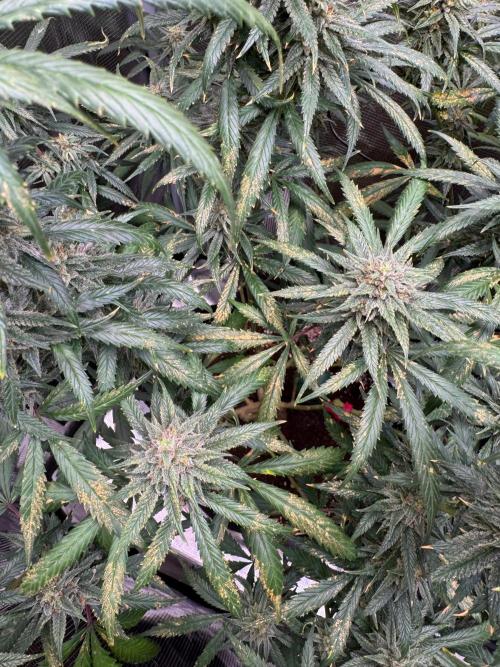
Leaves. Color · Mottling
Leaves. Other
1y ago
1
3


Solved
Dillsnills
Leaves stuck together, what to do???This one plant leaves r stuck together idk how because it looks like it's jus tucked under the leaf, I've tried moving it but it stays stuck and I don't want to damage it at all. Should I jus let it go see what happens? Input and advice greatly appreciated.
Leaves. Other
Plant. Other
6y ago
2
2