Likes
Comments
Share
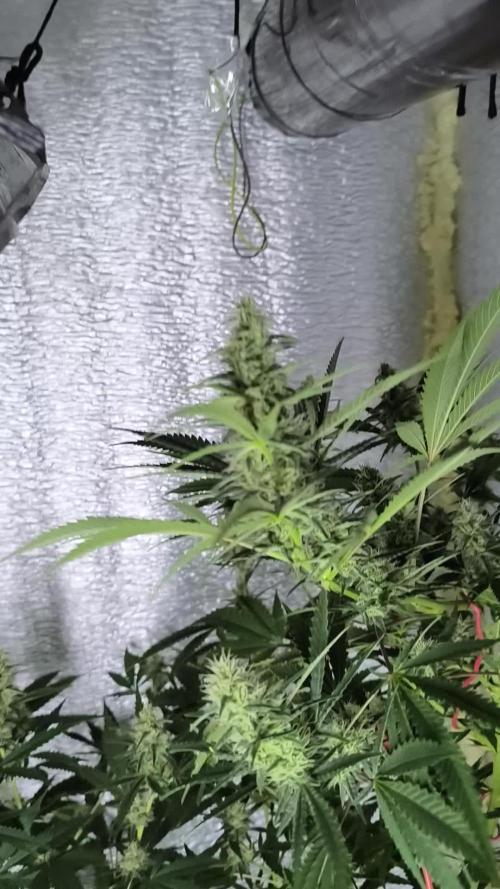
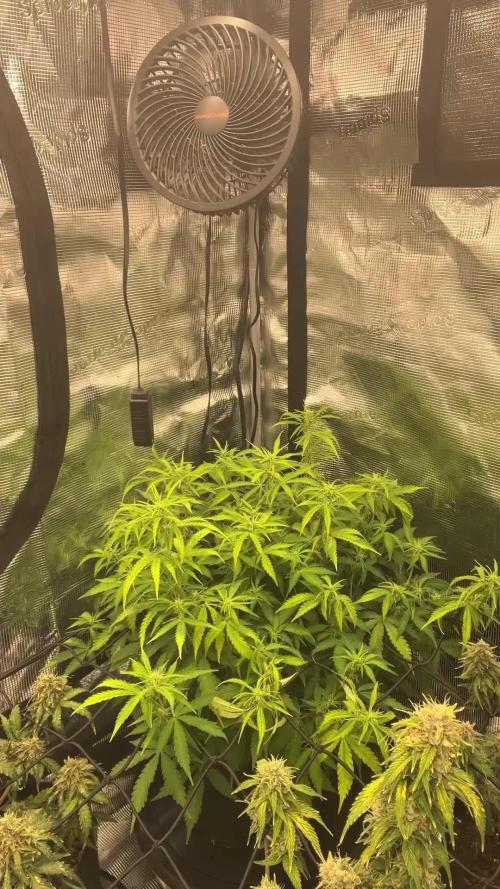
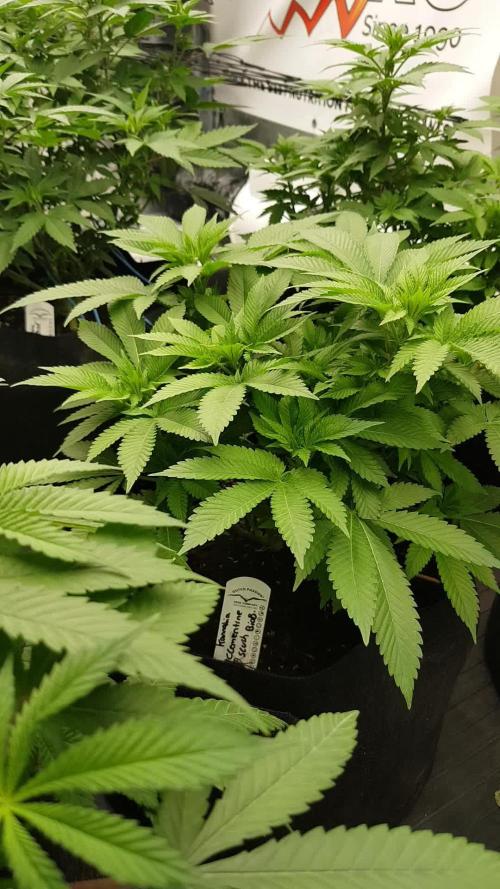
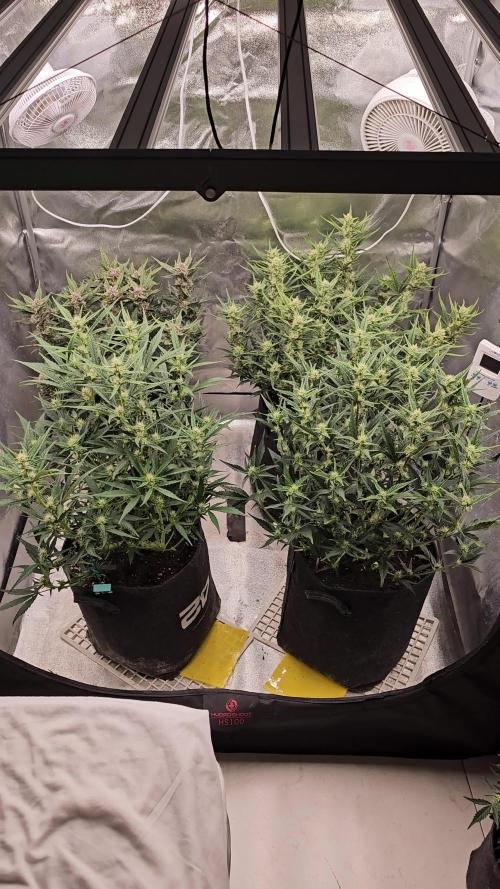
Almost the end of the week. I thought I'd put up a midweek post. First week of flower almost in the books and the stretch has started. Everything is going well so far. Nutes dialed in, plants happy, the green thumb is working its magic.
Likes
16
Share
@osmrducks
Follow
Day 22: Honestly didn't think I would have made it this far. The girls are looking great minus a couple of issues. I have over watered them and over fed too! Not to mention trying to LST too early. I will wait a bit longer before watering this time. Day 23: MORNING - They were super dry. I have been over watering a bit so I watered maybe 1/2 gallon for all 6. I also did some more LST and took 1 large fan leaf off of each plant. I will update again before lights out. Day 23: NIGHT - The girls are responding very well to the LST. I don't think they are liking the 80°. I am starting to have issues with lower humidity again. I need to try and figure some sort of ducting out or possibly even get a small AC unit for the grow room. Day 24: MORNING - I removed a couple more leaves that were covering potential bud sites. I have also done a partial main-line on the smallest girl. It looks to be already showing pistols. I've had to open the tent with a big fan blowing directly in with the humidifier behind it. The girls were getting hot and dry. Day 24: NIGHT - Well 5 are showing to be female. The biggest plant is showing no signs of sex. I am guessing it will be the mystery seed. I will be doing no more LST to these ladies for at least a week or better. I think I have stressed them out enough the past 2 days. Day 25: These girls are very resilient!! I tortured them all weekend and the one I nopped off to do a sort of mainline grew by 20% at least. Day 26: It is the official 3 week mark today and the girls are starting to flower. I tied em down to get light to all bud sights. I will 100% not touch them unless they need it from this point!!!! They are soo small and I need not stunt them any more!! I have removed the Mystery Seed as it looks to be a male and I do not want to take the chance!! Also fed and watered today. Only 200 ppm for the feed. Day 27: Nothing new to report. These girls are gonna be tiny :| I must've stressed em too much too soon :( Looking good though I think! 💪 Day 28: I never do what I say. Dumb! Broke main stem on one of the best plants. Taking it as a lessons learned. It's been two hours and she looks SICK! Oh well.
Likes
1
Share
@HK_OG
Follow
Mein 1. Steckling von meiner TAX Bracket. Wir starten direkt in der 1. Blütewoche. Ich weiß was uns erwartet und freu mich drauf es hoffentlich noch besser als beim 1. Run machen werde.
Likes
8
Share
🐹I pruned them FIM a few days ago, and future outbreaks appear. I also did a slight large leaf defoliation. 👌🏻
Likes
10
Share
Week 6, slow growth but now finally starting to kick on properly and look like decent sized plants 💚
Processing
Likes
14
Share
@Finsfan
Follow
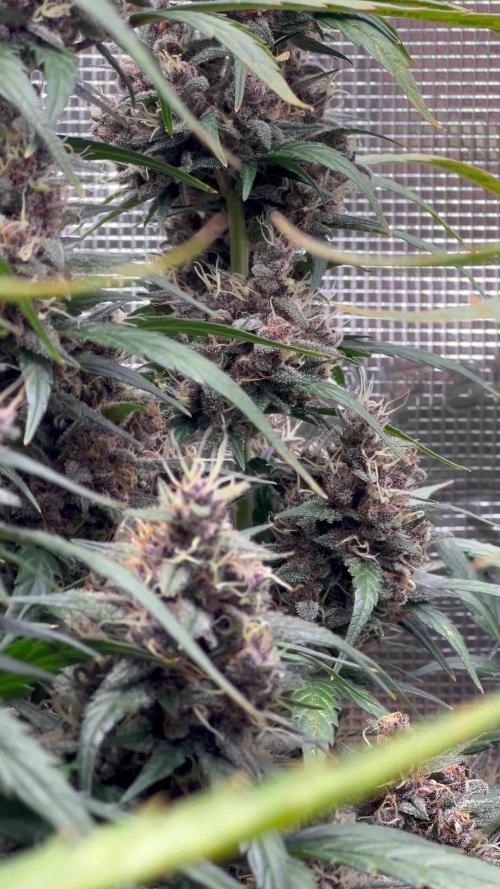
Strong smell and bulk to the colas. 70/30 orange:white hairs. Lots of milky trich's when looking thru a scope. Not many amber, if any, do I know we close. Thinking I'll harvest next weekend based on today.
Likes
55
Share
What's in the soil? What's not in the soil would be an easier question to answer. 16-18 DLI @ the minute. +++ as she grows. Probably not recommended, but to get to where it needs to be, I need to start now. Vegetative @1400ppm 0.8–1.2 kPa 80–86°F (26.7–30°C) 65–75%, LST Day 10, Fim'd Day 11 CEC (Cation Exchange Capacity): This is a measure of a soil's ability to hold and exchange positively charged nutrients, like calcium, magnesium, and potassium. Soils with high CEC (more clay and organic matter) have more negative charges that attract and hold these essential nutrients, preventing them from leaching away. Biochar is highly efficient at increasing cation exchange capacity (CEC) compared to many other amendments. Biochar's high CEC potential stems from its negatively charged functional groups, and studies show it can increase CEC by over 90%. Amendments like compost also increase CEC but are often more prone to rapid biodegradation, which can make biochar's effect more long-lasting. biochar acts as a long-lasting Cation Exchange Capacity (CEC) enhancer because its porous, carbon-rich structure provides sites for nutrients to bind to, effectively improving nutrient retention in soil without relying on the short-term benefits of fresh organic matter like compost or manure. Biochar's stability means these benefits last much longer than those from traditional organic amendments, making it a sustainable way to improve soil fertility, water retention, and structure over time. Needs to be charged first, similar to Coco, or it will immobilize cations, but at a much higher ratio. a high cation exchange capacity (CEC) results in a high buffer protection, meaning the soil can better resist changes in pH and nutrient availability. This is because a high CEC soil has more negatively charged sites to hold onto essential positively charged nutrients, like calcium and magnesium, and to buffer against acid ions, such as hydrogen. EC (Electrical Conductivity): This measures the amount of soluble salts in the soil. High EC levels indicate a high concentration of dissolved salts and can be a sign of potential salinity issues that can harm plants. The stored cations associated with a medium's cation exchange capacity (CEC) do not directly contribute to a real-time electrical conductivity (EC) reading. A real-time EC measurement reflects only the concentration of free, dissolved salt ions in the water solution within the medium. 98% of a plants nutrients comes directly from the water solution. 2% come directly from soil particles. CEC is a mediums storage capacity for cations. These stored cations do not contribute to a mediums EC directly. Electrical Conductivity (EC) does not measure salt ions adsorbed (stored) onto a Cation Exchange Capacity (CEC) site, as EC measures the conductivity of ions in solution within a soil or water sample, not those held on soil particles. A medium releases stored cations to water by ion exchange, where a new, more desirable ion from the water solution temporarily displaces the stored cation from the medium's surface, a process also seen in plants absorbing nutrients via mass flow. For example, in water softeners, sodium ions are released from resin beads to bond with the medium's surface, displacing calcium and magnesium ions which then enter the water. This same principle applies when plants take up nutrients from the soil solution: the cations are released from the soil particles into the water in response to a concentration equilibrium, and then moved to the root surface via mass flow. An example of ion exchange within the context of Cation Exchange Capacity (CEC) is a soil particle with a negative charge attracting and holding positively charged nutrient ions, like potassium (K+) or calcium (Ca2+), and then exchanging them for other positive ions present in the soil solution. For instance, a negatively charged clay particle in soil can hold a K+ ion and later release it to a plant's roots when a different cation, such as calcium (Ca2+), is abundant and replaces the potassium. This process of holding and swapping positively charged ions is fundamental to soil fertility, as it provides plants with essential nutrients. Negative charges on soil particles: Soil particles, particularly clay and organic matter, have negatively charged surfaces due to their chemical structure. Attraction of cations: These negative charges attract and hold positively charged ions, or cations, such as: Potassium (K+) Calcium (Ca2+) Magnesium (Mg2+) Sodium (Na+) Ammonium (NH4+) Plant roots excrete hydrogen ions (H+) through the action of proton pumps embedded in the root cell membranes, which use ATP (energy) to actively transport H+ ions from inside the root cell into the surrounding soil. This process lowers the pH of the soil, which helps to make certain mineral nutrients, such as iron, more available for uptake by the plant. Mechanism of H+ Excretion Proton Pumps: Root cells contain specialized proteins called proton pumps (H+-ATPases) in their cell membranes. Active Transport: These proton pumps use energy from ATP to actively move H+ ions from the cytoplasm of the root cell into the soil, against their concentration gradient. Role in pH Regulation: This active excretion of H+ is a major way plants regulate their internal cytoplasmic pH. Nutrient Availability: The resulting decrease in soil pH makes certain essential mineral nutrients, like iron, more soluble and available for the root cells to absorb. Ion Exchange: The H+ ions also displace positively charged mineral cations from the soil particles, making them available for uptake. Iron Uptake: In response to iron deficiency stress, plants enhance H+ excretion and reductant release to lower the pH and convert Fe3+ to the more available form Fe2+. The altered pH can influence the activity and composition of beneficial microbes in the soil. The H+ gradient created by the proton pumps can also be used for other vital cell functions, such as ATP synthesis and the transport of other solutes. The hydrogen ions (H+) excreted during photosynthesis come from the splitting of water molecules. This splitting, called photolysis, occurs in Photosystem II to replace the electrons used in the light-dependent reactions. The released hydrogen ions are then pumped into the thylakoid lumen, creating a proton gradient that drives ATP synthesis. Plants release hydrogen ions (H+) from their roots into the soil, a process that occurs in conjunction with nutrient uptake and photosynthesis. These H+ ions compete with mineral cations for the negatively charged sites on soil particles, a phenomenon known as cation exchange. By displacing beneficial mineral cations, the excreted H+ ions make these nutrients available for the plant to absorb, which can also lower the soil pH and indirectly affect its Cation Exchange Capacity (CEC) by altering the pool of exchangeable cations in the soil solution. Plants use proton (H+) exudation, driven by the H+-ATPase enzyme, to release H+ ions into the soil, creating a more acidic rhizosphere, which enhances nutrient availability and influences nutrient cycling processes. This acidification mobilizes insoluble nutrients like iron (Fe) by breaking them down, while also facilitating the activity of beneficial microbes involved in the nutrient cycle. Therefore, H+ exudation is a critical plant strategy for nutrient acquisition and management, allowing plants to improve their access to essential elements from the soil. A lack of water splitting during photosynthesis can affect iron uptake because the resulting energy imbalance disrupts the plant's ability to produce ATP and NADPH, which are crucial for overall photosynthetic energy conversion and can trigger a deficiency in iron homeostasis pathways. While photosynthesis uses hydrogen ions produced from water splitting for the Calvin cycle, not to create a hydrogen gas deficiency, the overall process is sensitive to nutrient availability, and iron is essential for chloroplast function. In photosynthesis, water is split to provide electrons to replace those lost in Photosystem II, which is triggered by light absorption. These electrons then travel along a transport chain to generate ATP (energy currency) and NADPH (reducing power). Carbon Fixation: The generated ATP and NADPH are then used to convert carbon dioxide into carbohydrates in the Calvin cycle. Impaired water splitting (via water in or out) breaks the chain reaction of photosynthesis. This leads to an imbalance in ATP and NADPH levels, which disrupts the Calvin cycle and overall energy production in the plant. Plants require a sufficient supply of essential mineral elements like iron for photosynthesis. Iron is vital for chlorophyll formation and plays a crucial role in electron transport within the chloroplasts. The complex relationship between nutrient status and photosynthesis is evident when iron deficiency can be reverted by depleting other micronutrients like manganese. This highlights how nutrient homeostasis influences photosynthetic function. A lack of adequate energy and reducing power from photosynthesis, which is directly linked to water splitting, can trigger complex adaptive responses in the plant's iron uptake and distribution systems. Plants possess receptors called transceptors that can directly detect specific nutrient concentrations in the soil or within the plant's tissues. These receptors trigger signaling pathways, sometimes involving calcium influx or changes in protein complex activity, that then influence nutrient uptake by the roots. Plants use this information to make long-term adjustments, such as Increasing root biomass to explore more soil for nutrients. Modifying metabolic pathways to make better use of available resources. Adjusting the rate of nutrient transport into the roots. That's why I keep a high EC. Abundance resonates Abundance.
Likes
19
Share
📅 D119/D03 - 13/03/24 🚀 Drying 🎬 Added 22 pics and the timelapse of the harvest ________________________________ 📅 D120/D04 - 14/03/24 🚀 Drying ________________________________ 📅 D121/D05 - 15/03/24 🚀 Drying ________________________________ 📅 D122/D06 - 16/03/24 🚀 Drying. First trim : 3 g and a tiny flower placed in the jar for curing ________________________________ 📅 D123/D07 - 17/03/24 🚀 Drying ________________________________ 📅 D124/D08 - 18/03/24 🚀 Drying. I've made the very first try and she's very promising 😍😍😍 @Pure_Instinto_Seed_Bank ________________________________ 📅 D125/D09 - 19/03/24 🚀 Drying. Trimmed 7 grams and start curing of about 10 g for now. She's very sticky and very fragrant with an intense smell. Lot of rosin stucked to the scissor, good sign ! 😊 ________________________________ 📅 D126/D10 - 20/03/24 🚀 Drying. She's quite ready for trimming, I'll start tomorrow ________________________________ 📅 D127/D11 - 21/03/24 🚀 Drying. Trimmed 14 g from one of the main bud.... Less than expected but very dense, high quality buds ________________________________ 📅 D128/D12 - 22/03/24 🚀 Drying. Trimmed 11g ________________________________ 📅 D129/D13 - 23/03/24 🚀 Drying. Trimmed 22g ________________________________ 📅 D130/D14 - 24/03/24 🚀 Drying. Trimmed 11 g ________________________________ 📅 D131/D15 - 25/03/24 🚀 Drying. Trimmed 12 g ________________________________ 📅 D132/D16 - 26/03/24 🚀 Drying. Trimmed 16 g + 20 g + 16 g = 52 g. So far 132 g in total and 2 buds missing ________________________________ 📅 D133/C01 - 27/03/24 🚀 Trimmed last 15 g - Total outcome is 147 g. First day of curing
Likes
35
Share
@SAC87
Follow
Day 70 Well things have really turned around this last week. The buds are hard. They have gotten significantly firmer since flushing. The smell is super potent of tropical, sweet citrus. It and the others are too much for my old carbon filter to handle. I have another ordered. So now I’m just watering when dry til the trichomes are ready and watching the colors change!!! Happy Growing 🌱👍🏻
Likes
19
Share
She's looking thin, not much foliage but the flowers are there, looks a bit like the first time I grew blueberry cheese auto.
Likes
54
Share
@Sadhus
Follow
**Semaine Harvest : Récolte Finale – Sticky Broccoli (28 avril 2026)** **Note :** Fin du cycle Eternity Grow Cup 2. Récolte effectuée en semaine 10 de floraison (légèrement anticipée). Tout le journal de culture est maintenant complet. ### Contexte et Bilan du Cycle Après 10 semaines de floraison (semaine 14 globale), la récolte a été déclenchée suite à un départ de botrytis sur une autre plante du même espace. J’aurais pu laisser encore quelques jours pour laisser mûrir un peu plus les trichomes ambrés, mais la sécurité prime. La plante dominante (150 cm) a donné un beau rendement qualitatif, avec des buds denses, extrêmement frosty et résineux. **Poids frais : environ 780 grammes** (poids humide total des buds trimés, sans les grosses tiges). Mise à jour prévue dans 2 semaines pour le **poids sec final** après un bon curing. ### Observations à la Récolte - **Buds** : Denses et compacts, très collants. Couverture trichomale exceptionnelle (majoritairement laiteux avec quelques têtes ambrées). L’aspect sugar est magnifique, les buds brillent littéralement. - **Odeur** : Très agréable, sucrée, épicée et florale, typique de Sticky Broccoli. Puissante même après le flush. - **Résine** : Extrêmement résineuse au toucher – parfait pour du dry sift ou un petit Ice-o-Lator. - **Structure** : Belle densité globale, même si la taille individuelle des buds reste dans la moyenne haute pour la variété (pas les plus gros que j’ai vus, mais la qualité trichomale compense largement). - **Santé** : Plantes propres jusqu’à la fin, pas de carence visible. Le flush des 3 derniers jours (EC 0,7) a bien aidé à nettoyer les sels. **Clones** : Quelques clones prélevés plusieurs semaines auparavant ont été repiqués avec succès dans leur nouveau système. Ils sont bien enracinés et prêts à repartir pour un prochain cycle de végétation/floraison. La génétique est conservée ! ### Paramètres en Fin de Cycle (semaine 10) - Température jour/nuit : 19-21 °C / 14-15 °C - Humidité : 48-58 % jour / 29-39 % nuit - VPD : 0.9-1.3 kPa - PPFD : 550 (DLI 24) - UV : 90 min/jour - EC final : 1.0 puis flush à 0.7 (Terra Aquatica seul) - pH : 5.8-6.0 - Steering : génératif jusqu’à la fin - 48h de blackout avant récolte : appliqué pour booster la résine et améliorer la qualité des trichomes. ### Plans Post-Récolte - **Séchage** : 7-10 jours à 18-20 °C et 55-60 % d’humidité dans un espace sombre et ventilé. - **Curing** : Minimum 2-3 semaines en bocaux (burping régulier) pour affiner les terpènes et la douceur. Mise à jour dans 2 semaines avec le poids sec final. - **Utilisation** : Une partie en fleurs séchées/cure, et un petit batch pour **dry sift** + **Ice-o-Lator** (bubble hash) histoire de se régaler avec la résine exceptionnelle de cette Sticky Broccoli. **Tips éducatif final : Le flush et le blackout en fin de cycle** - **Flush** (3 derniers jours à EC très bas) : Permet d’éliminer les sels accumulés et améliore nettement le goût final (moins de chimie, plus de terpènes purs). - **48h de blackout** : Technique simple mais efficace qui stress légèrement la plante de manière positive, augmentant la production de résine et la clarté des trichomes juste avant la coupe. Ce fut un très beau cycle, propre et instructif malgré l’interruption due au botrytis. La qualité résineuse et l’odeur compensent largement. Merci à Zamnesia et Plagron pour le matos ! **#GrowLegendary #Zamnesia #Plagron #EternityGrowCup2 #StickyBroccoli** Dans 2 semaines je mettrai à jour avec le poids sec et les premières impressions après curing. **Estimation du poids sec final** Avec **780 grammes de poids frais** (buds humides, après trim initial mais avant séchage complet), voici une estimation réaliste pour cette Sticky Broccoli : ### Estimation raisonnable - **Poids sec attendu** : **180 à 230 grammes** (environ **23-30 %** du poids frais). **Pourquoi cette fourchette ?** - Les buds frais contiennent typiquement 70-80 % d’eau. - Après un bon séchage (jusqu’à 10-12 % d’humidité résiduelle) + curing, il reste généralement **20-30 %** du poids humide initial. - 20 % → **156 g** (estimation basse, si buds très denses ou séchage poussé) - 25 % → **195 g** (estimation moyenne, la plus courante pour des buds compacts comme les tiens) - 30 % → **234 g** (estimation haute, si les buds retiennent un peu plus d’humidité ou sont particulièrement résineux) Tes buds étant décrits comme **denses, très collants et frosty**, je pencherais plutôt vers le **milieu/haut de la fourchette** : **190-220 grammes** une fois bien secs et cured. ### Facteurs qui influenceront le résultat final - **Qualité du séchage** : Température 18-20 °C, humidité 50-60 %, bonne circulation d’air sans vent direct → perte d’eau progressive et uniforme. - **Trim** : Si tu as fait un wet trim assez serré, le poids sec sera un peu plus bas que si tu as laissé plus de sugar leaves. - **Densité des buds** : Plus ils sont compacts et résineux, moins ils perdent de poids relatif (mais ils sèchent parfois un peu plus lentement). - **Curing** : Pendant les 2-4 semaines en bocaux, tu perdras encore un peu d’humidité, mais le poids se stabilisera. ### Prochaines étapes 1. **Séchage** : 7-10 jours jusqu’à ce que les tiges cassent net (pas pliables). 2. **Curing** : Minimum 2 semaines (idéalement 4+) avec burping quotidien au début. 3. **Pesée finale** : Une fois le poids stabilisé (après 2 semaines de curing),
Likes
5
Share
Yesterday i took off some Leafs down there. Looks Like a Bouquet now 😄 She's responding great to the Training i have her. I'm pretty exited how she'll do in the Future weeks 🤙🏽
Likes
7
Share
@cliv4ge
Follow
Last week of the apple fritter.. As Im writing this I already harvested it. Ill report back in 2 weeks after the drying and before the curing. This was an amazing journey that its not yet finished. Drying and curing is very important and ill be doing the following: Drying Environment: - Temperature: Maintain between 18-22°C (65-72°F). This prevents terpenes from degrading while slowing the drying process. - Humidity: Aim for 50-60% relative humidity to avoid mold and overly crispy buds. - Airflow: Use a small fan to keep air circulating, but don’t let it blow directly on the buds to avoid uneven drying. - Darkness: Keep the tent as dark as possible. Light can degrade cannabinoids like THC. - Timeframe: Drying typically takes 7-14 days. Stems should snap (not bend) when drying is complete. Curing: - Jar Storage: Once the buds are dry, ill trim them again properly - Humidity Packs: Using Boveda packs (58-62%) to maintain proper curing humidity inside jars. - Burping: For the first 2 weeks, open jars for 10-15 minutes daily to release excess moisture and allow fresh air in. Afterward, reduce burping to once a week for long-term storage. - Curing Time: At least 2 weeks minimum.. Ill comeback soon with final dry weight. Wet was 400g. Keep up the good work galera 💜
Likes
15
Share
@Messypies
Follow
Auto cinderella jack - Amazing week of growth. There are new nodes exploding from everywhere and its not showing signs of slowing down. They are currently loving the organic nutes and have started showing signs of flowering. Auto critical cheese - this plant has shot up recently. It was planted a week later that the ACJ but is growing some seriously fat fan leaves. Should be a nice yeilder. Peanut butter cookies - this girl is looking pretty sorry for herself. I am intentionally trying to keep her as small as possible so that I can get the autos out before flipping into flower but she is gonna be a beast. Will transplant into a final pot in the next day or so.
Likes
58
Share
@AsNoriu
Follow
Day 64. Girls are going ok, but : I had pH issues, recalibrated meter. Have small thrips infestation, so bought 25000 Amblyseius swirskii, natural predators. Should be done deal !!! One Cookie is going violet !!! Very nice, hard to reach to make clear photos, I will try better next week, she is really really nice!!! Strawberry is going insane nuts, she crowned herself new QUEEN. Her top became triple top ;))) Beast not a strain !!!! Happy growing !!!
Likes
10
Share
@Lazuli
Follow
Looks like a heavy yielder The smell is very good (haze kind of) I feed 1000ppm to get around 800 runoff. Now the bulking begins
Likes
8
Share
Ab den 13:11 ab zum trocknen. Da freue ich mich