


Likes
Comments
Share


@masterofsmeagol
Follow
This strain was wicked fun to grow. Yield is amazing. One plant filled a 30 gallon tote once dried. WPM and leaf septoria was horrible this year but this strain seemed to do just fine. Very resilient. Grew short and stout like an indica. Covered in trich's and smells amazing.


Likes
2
Share


@nijuana
Follow
Everything is ok
I transplant the sluricane to the greenhouse with the sleepy Joe :)

Likes
1
Share


@Kraken85
Follow
Bouture + commentaires...
Co2 Maison Gélifié : ,agar-agar, levure de boulanger en cubes, sirop grenadine, BICA = bicarbonate de soude + eau.
Silence : ça pousse !
Début du 2ème Cycles 01/05/2022.


Likes
11
Share


@CocoLogic
Follow
Sept 13th: (F27)
Fertigation once a day with same recipe (1200 EC 6.1 PH) watered until 10-20% run-off
Sept 14th: (F28)
Fertigation once a day with same recipe (1200 EC 6.1 PH) watered until 10-20% run-off
Sept 15th: (F29)
Fertigation once a day with same recipe (1200 EC 6.1 PH) watered until 10-20% run-off
Sept 16th: (F30)
Fertigation once a day with same recipe (1200 EC 6.1 PH) watered until 10-20% run-off
Sept 17th: (F31)
Fertigation once a day with same recipe (1200 EC 6.1 PH) watered until 10-20% run-off
Had to supercrop 1 branch on the PE#2 since it was almost in the roof of the tent
Sept 18th: (F32)
Fertigation once a day with same recipe (1200 EC 6.1 PH) watered until 10-20% run-off
Sept 19th: (F33)
Fertigation once a day with same recipe (1200 EC 6.1 PH) watered until 10-20% run-off


Likes
3
Share

@Oldwied
Follow
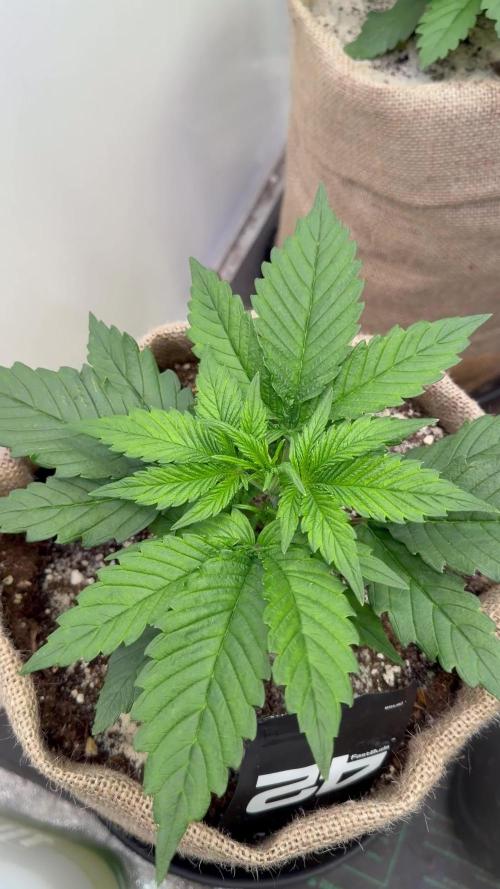
Day 23
Photoshooting
Topping (only left the 3. node)
This plant shows extremely short internodes.



Likes
21
Share


@w33dhawk
Follow
Moin an alle der licht plan ist seit dieser Woche auf 12/12 gibt nicht viel zu sagen habe sonntag den 12.06.22 gegossen und dann bis donnerstag den 16.06.22 einfach nix gemacht leider hätte schon mittwochs giessen können. Nach dem giessen am donnerstag habe ich die Ladys nochmal von überschüssigem Material (Seiten Äste und Fächer Blätter) die in die Mitte der Pflanze ragen zu entfernen. Stretch läuft gut sind jetzt knapp 11 cm in 7 Tagen hoffe da kommt noch ein bisschen was wovon ich aber aus gehe so irgendwas zwischen 15 und 30 cm bis zum Ende des stretches noch oben drauf währen schon gut denke ich mal hab ja nicht allzu viel Ahnung vom Main lining is jetzt der 2. Versuch an der Technik (hab gemerkt das es wohl schlauer ist bei der Technik nur eine Pflanze im Zelt zu haben da das die licht Verteilung auf die einzelnen Äste erleichtert und somit alles an Ästen gleichmäßiger beleuchtet wird was dem Wachstum der Äste in Sachen Einheitlichkeit wohl mehr zu Gute kommt) euch noch ne schöne rest woche......

Likes
23
Share

Likes
10
Share


@I_Identify_As_A_Dan
Follow
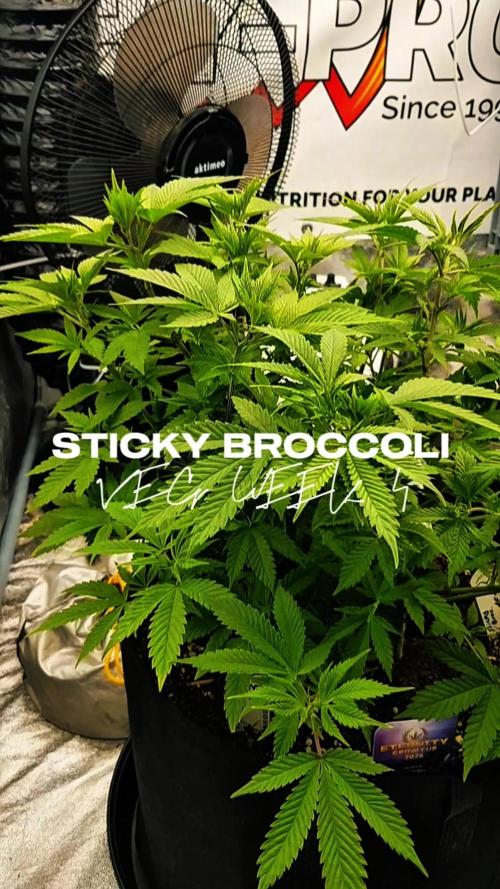
Week 8 for White Widow by Greenhouseseedco,
Shes got her final topping to 16 mains 😬 Or will she get the 32 mains treatment.... 😎 Ill probably keep her at 16 tops but we'll see how stuff goes as she still has 2 months of veg ahead of her...
Have been fighting high humidity but atleast i still in veg😅 Will be buying a dehumidifier for flower time.

Likes
11
Share


@RhodiesGrow
Follow
North Atlantic Seed Company freebie Barney's Farm Do-Si-Dos Auto, germinated in rapid rooter placed in AC Infinity propagator. Temp 75º RH 85% +
DOS SI DOS AUTO by Barney's Farm
DOS SI DOS AUTO is an extraordinary new super breed of autoflower that is Indica-dominant with 65% Indica / 35% Sativa, dropping perfectly to our ever growing Autoflowering Cali Collection. This jewel brings together the historical parental power of Face Off OG x Girl Scout Cookies now crossed with our BF Super Auto #1 = Increased yields, power and trichome production providing DOS SI DOS AUTO with a serious genetic boost. Dos Si Dos Auto smooths away anxiety and pain and softens your day in every way. Lingering lime flavours will remind some of granny’s lemon meringue pie, fresh out the oven. This spellbinding speed demon grows climbs to an indoor height of 100cm and up to 140cm outdoors. This plant explodes from seed to harvest in a mere 70-75 days generating stupendous yields of up to 600g/m2, with THC measured above 20%.
Dive into a delicious dream of divine delight with the one and only Dos Si Dos Auto, the autoflower that lets you transcend reality.
Genetics
Dos Si Dos x BF Super Auto #1
Indica / Sativa Percentage 65% Indica / 35% Sativa
Flowering Time
70 – 80 days from sprout
Likes
12
Share


@CoqueSousVide19
Follow
Started LST on the plant. Found a 6w LED light tube meant for an aquarium/terrarium and have started using that in a 24 hour light schedule.
Also giving it nutes with BioBizz Fish Mix and seaweed that I use on my vegetables, but I'm using small amounts to avoid any problems.
Likes
13
Share


@knicko
Follow
Auf der Waage im getrockneten Zustand waren es 130g somit habe ich mir den Fixkosten ein €/g von 2.55€/g das finde ich nicht schlecht

Likes
5
Share


@BB_UK
Follow
Amazing week, she’s working on forming her buds now and they are going to be some thing special 😊 put my ts1000 onto 100% for the last few weeks too! Can’t wait to see her colours! Stay tuned and if your so lucky to pass my diary! Hit the like button it’s free!
Likes
79
Share


@Salokin
Follow
Hello Growmies!
As we conclude our Epic Buzz journey, let's dive into the final harvest data under the exceptional conditions provided by the Trolmaster and the engaging platform of GD. This week marks the end of our cultivation cycle with a final wet weight of 1720 grams from a setup featuring the FC4800 light dimmed to 65% maximum, utilizing 108 watts over an area of approximately 0.48 square meters.
Final Harvest Metrics:
Yield Efficiency: Achieved an impressive yield efficiency of 15.92 wet grams per watt, underscoring the efficiency of our light setup.
Area Yield: With a productivity of 3583.33 wet grams per square meter, our cultivation space was maximized for optimal output.
Plant Yield: Each plant contributed significantly, averaging 573.33 grams, highlighting robust growth and development.
Density: The garden hosted 6.25 plants per square meter, optimizing space without overcrowding.
Energy Utilization: The grow utilized 225 watts per square meter, a testament to our strategic light management.
A huge shoutout to Trolmaster for making such an amazing contest possible, and to GD for providing a platform that brings us all together. This cultivation journey has been a rewarding challenge, showcasing the potential of careful strain selection and attentive grow practices.
In the meantime, feel free to check out my upcoming Barneys Farm diaries which will soon take over this tent. Exciting times ahead as we continue to explore and share our passion for growing!
Stay Lifted!
Salokin

Likes
5
Share

@Chucky324
Follow
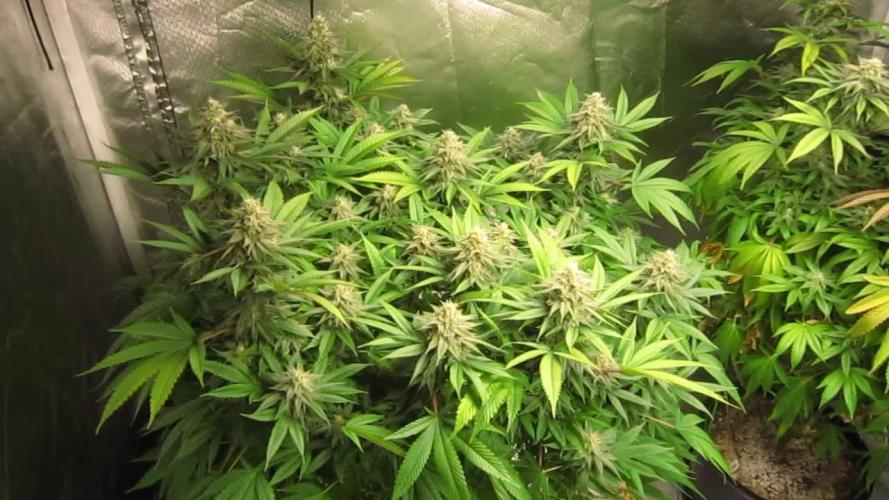
Hello. this is the end of week 7 and the beginning of week 8 of flowering.
Things are going great in here. The tent has a great smell,... of sweet citrus.
Got the thermal camera out to show some not seen heat. The buds under the light are hot.
This is the last week of nutrient. I like to flush for the last 2 weeks.
So expect to see some yellowing of leaves, for the last 2 weeks.
I flush because the smoke tastes better if I do, than if I don't. It take less time to cure too, if I flush.
OK. Be Cool.
Chuck.
Likes
8
Share


@Hiroots420
Follow
27/04/2021 (Day 42)
Todo viene muy bien, las plantas están comiendo con muchas ganas y consumen unos 15L de solución diario.
La preflora está comenzando!
Ya se puede observar como van estirando y mostrando bastantes pelos!
Los Citizen x 8 están trabajando a un 80% rondado los 500W.
28/04/2021 (Day 43)
Se realizo un nuevo cambio de solución, las plantas ya están tirando pelos y los leds están al 80%, se observo un gran crecimiento radicular y las paredes del tallo son increíblemente gruesas y duras.
03/05/2021 (Day 48)
Las plantas vienen con un crecimiento optimo pero la flora se está tardando demasiado en hacerse presente, se estima que es debido al estrés que tuvo en semana 3 de vege produjo un retraso de algunos días.
Esta semana se incorpora Safe Roots al sistema con la finalidad de que deje la solución lo mas limpia posible.
También se realizaron bastantes defoliaciones ya que no existía penetracion de luz teniendo en cuenta el tamaño que están ocupando (85% del espacio de cultivo a 30/35 cm de altura)


Likes
34
Share


@rhodes68
Follow
1/10 Week 10
Both are in flush and from the looks of the tricones these are the most potent plants we have grown to date.
Drinking has really slowed down but keeping the un-PH one gallon daily flush since tap water is cheap.
Annie doing very well under the LED lamp, TS-1000 plenty large enough for one plant in flower. This is encouraging for plans to replace the HID with either a TS-2000 or TS-3000(preferred) this spring before the summer heat.
Just a few more days....😎
1/11 Bud pics
Harvest Belle on 1/13 - Annie 1/16
Just getting them ready. taking off some useless leaves etc...
1/14 Harvesting Belle today, let her dry out one last day. Annie harvest at weeks end.
Harvest pics and total numbers at end of week when I take Annie
👉BELLE HARVEST
963 grams wet 👈
Annie got her last watering today, harvest in two days
1/15 Harvesting in about 12 hours, pics and numbers then
Likes
Comments
Share

@Count-Dooku
Follow
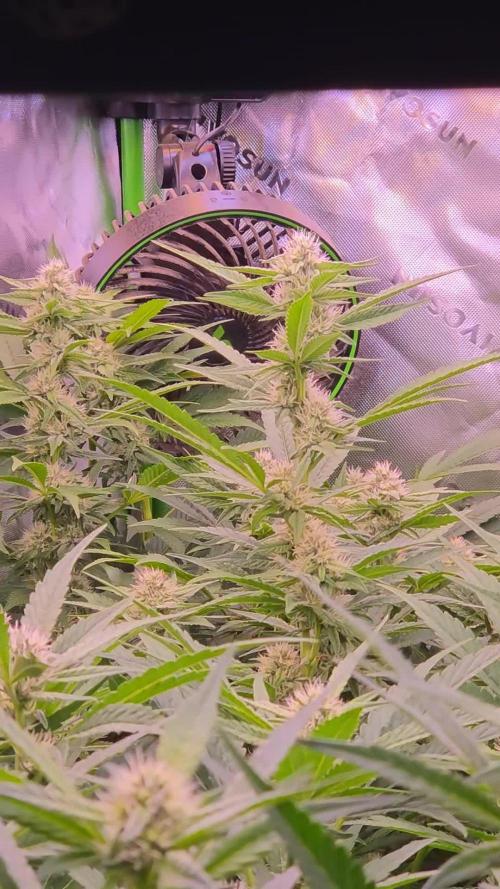
Might be time for some defol - gave them all a big defol and chopped the under sides a bit this week. I was feeding half strength for a while but last week was full and this week I bumped ec up a little bit too.
8/20 raised the light a few inches and centered it in the tent a bit to try to get more light bouncing off the walls into the lower canopy


Likes
6
Share

@Stoney_Stark
Follow
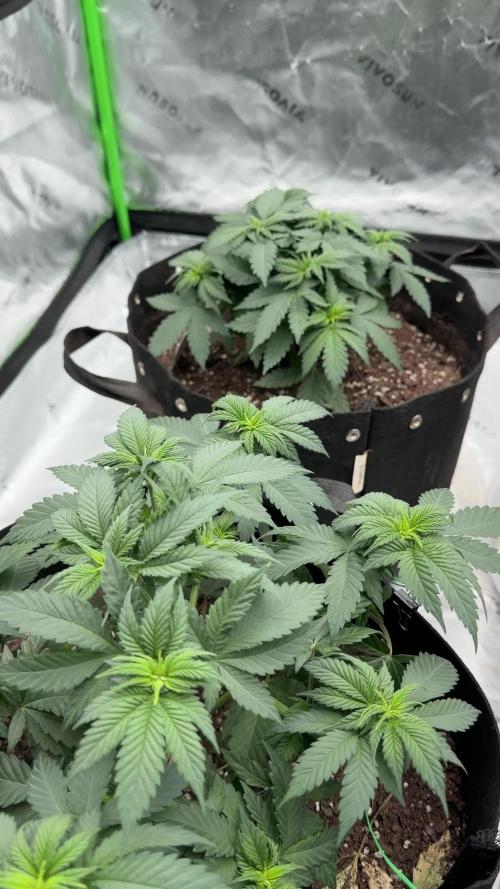
Week 3 Update — Transplant & Early Veg Development
Date: 11/12–11/17
Strain: Fast Diesel (IZI.Farm)
Medium: Fox Farm Happy Frog + Gaia Green Amendments
Light: Mammoth Nova Sun 950W
Grower: Stoney Stark / Little Lilly Farms
Light & Environment
Fixture: Mammoth Nova Sun Series 950W
Settings: 50% total | 100% cool | 40% warm | 0% IR | 0% UV
Previous PPFD: ~300 µmol/m²/s
Light Adjustment (11/17): Lowered 6", increasing canopy PPFD to ~435 µmol/m²/s
Temperature: 83°F
Humidity: lowered to 65% RH
Three phenos continue showing strong vegetative growth, while one runt remains smaller but healthy with no signs of stress or deficiency. A minor leaf-curling issue caused by airflow has been corrected. Considering relocating the driver outside the tent to help mitigate heat as the grow transitions toward flower.
Transplant Details (11/12 — Day 21)
All four plants were transplanted into 5-gallon pots.
Soil Blend & Purpose
Gaia Green 2-8-4: Supports root development and provides early phosphorus and potassium for the transition into flower.
Gaia Green 4-4-4: Balanced nutrient source maintaining steady vegetative growth.
Worm Castings (20%): Supplies organic nitrogen, microbial activity, and improved soil moisture retention.
Glacial Rock Dust: Provides trace minerals and silica for stronger structure.
Mykos: Mycorrhizae applied to the root ball to promote efficient nutrient uptake and early root expansion.
Watering & Nutrient Breakdown
Initial Watering (2 gal RO)
½ gallon per plant, pH 6.4
Silicium (1 ml)-Improves cell wall strength and plant stress resistance. Helps stabilize growth during and after transplant.
CalMag (4 ml)-Replaces the calcium and magnesium absent in RO water and supports new growth development.
Ruby Fulvic (10 ml)-Improves nutrient movement, chelation, and trace mineral uptake in the freshly amended soil.
Pure Zym (8 ml)-Breaks down organic material and dead roots, converting them into available nutrients and keeping the rhizosphere clean.
Rhyzium (2 ml)-Promotes rapid root establishment by adding beneficial microbes.
Recharge (1 tsp)-Provides a strong microbial inoculation that enhances nutrient cycling and soil vitality.
Feeding Log
11/15 — Light Microbial Feed
1 gal RO | pH 6.4 | 250 ppm
Silicium (1 ml): Continued cell-wall support.
CalMag (2 ml): Maintains Ca/Mg levels during early veg.
Ruby Fulvic (5 ml): Increases nutrient uptake efficiency.
Pure Zym (4 ml): Supports enzymatic root-zone activity.
Photosynthesis Plus (6 ml): Adds beneficial microbes that enhance carbon metabolism and overall plant vitality.
This mild feed kept the microbial community active while roots colonized the pot.
11/17 — Early Veg Support Feed
2 gal RO (½ gal each) | pH 6.4 | 250 ppm
Silicium (1 ml): Helps support structural integrity as light intensity increases.
CalMag (4 ml): Ensures steady Ca/Mg availability under higher PPFD conditions.
Ruby Fulvic (10 ml): Maximizes micronutrient uptake and transport.
Rhyzium (2 ml): Continues promoting root spread throughout the 5-gallon pots.
Growth Notes & Plans
All four plants have adjusted well to their new containers.
Three phenos are vigorous; one remains a smaller but healthy runt.
Increased PPFD from 300 to 435 has improved leaf posture, node spacing, and overall vegetative growth.
Humidity reduced to 65% to match increasing canopy density and airflow needs.
I tied down branches on 3 of the 4 plants on 11/20 to open their structure and prepare them for the upcoming stretch. The smallest pheno—the runt—was left untouched to continue growing vertically. It’s still healthy, just not meeting the overall standard of the garden. I’m giving it one more week to show improvement before deciding whether it stays in the run or gets culled.
Flip Decision
After monitoring growth, root establishment, and canopy development, the decision has been made to flip to flower on 11/26.
This will give the plants enough time to fully settle into their 5-gallon pots while still maintaining a 4–5 week vegetative cycle.
