


Likes
Comments
Share


@George1981
Follow
Hola compañeros siento no haber podido documentos estas semanas ya entrando en la 4 semana de floración que os parece, abonando con biobizz


Likes
46
Share


@eldruida_lamota
Follow
Vamos familia que ya actualizamos la cosecha de estas Candy Rain de Zamnesia, para el concurso POWER BUDS Plagron x Zamnesia CONTEST.
Ya era hora de cosechar, estoy bastante contento con los resultados.
Vaya flores que se han marcado repletas de tricomas, y las flores se marcan aromas dulces y afrutados.
Es una variedad bastante fácil de cultivar y muy resistente, crecieron desde el principio bien vigorosas, sin problemas y al final de todo recompensó.
Las condiciones ambiéntales han sido máximas en 25 y mínimas en 20 y una humedad estable en torno al 36% al final de floración y en el secado.
Os comento que tengo un descuento y para que compréis en la web de Zamnesia de un 20%, el código es ZAMMIGD2023
The discount 20% and the code is ZAMMIGD2023
https://www.zamnesia.com/
Espero que disfruteis este diario, buenos humos 💨💨


Likes
7
Share


@LeakyTitsBukkake
Follow
Going to have great good grow only premium Milk Solids Big champion Plant. Household mothers hidden formula.
Coming more tomorrow week.
Good Luck me!

Likes
15
Share


@MrGrowMan
Follow
Week 9-10
1 nutrient water
1 non nutrient water
LsT and Scrog
Diesel and Mimosa (front 2) start flowering
2 break up cake no flowering, i guess my flowers fem and
If it continues like this for another 1-2 days, I will switch to 12/12 light period.
all pH problems, runoff 6.8 pH

Likes
78
Share


@1Right_Angle
Follow
June 16th, 2022
- plant had some living soil amended into substrate, plant was fed on the 14th, defoliated a bit, extra support installed due to the punishing winds of the location. More Rain Heat and Humidity are scheduled. See where it goes… she looks Healthy
Likes
77
Share


@cheetah844
Follow
I'm so excited I have a purple phenotype!
I've wanted one for the past year 💜
The flowers are coming along - putting that carbon filter to use 😁
*I hope I'm not infringing on any rules about the music video.
I'm very excited about a purple phenotype - I put some music on while updating my GD & this song started playing on YouTube autoplay. 🤣 I had to edit it & add it.*

Likes
2
Share

@fabialien
Follow
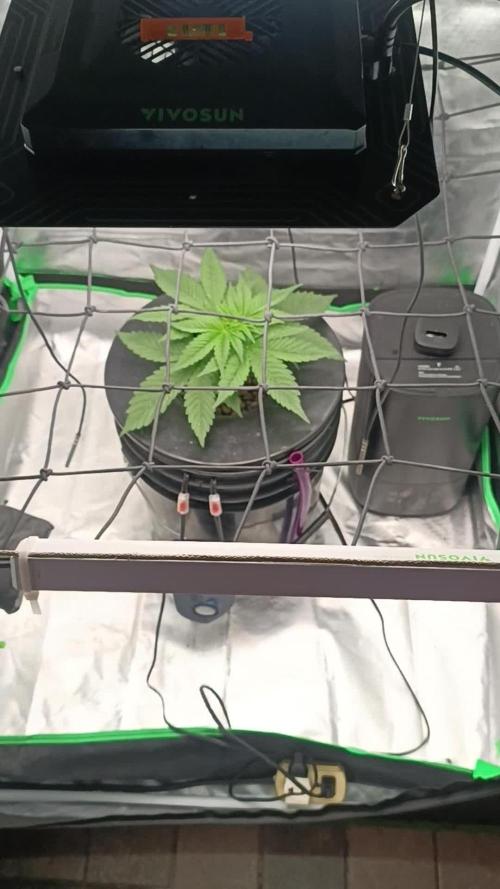
Comienza la semana del 3 al 9 de noviembre.
Se le hace poda de bajos nuevamente el 2 de noviembre


Likes
8
Share


@RFarm21
Follow
11 março - 17 março
12 março - nutrientes misturados em 1l de água
16 março feeding:
bio heaven 1.5ml; sílica 0.1ml; bio grow 1ml
Likes
51
Share


@urbi09
Follow
FEEDING
As previous weeks, plant was given nutrient solution twice a day in the concentration down bellow
- FloraSeries Gro-->1.8 mL/L
- FloraSeries Micro-->1.2 mL/L
- Flore Series Bloom-->0.6 mL/L
- Calcium solution-->1 mL/L
I started with 5L of tap water measured at 240ppm. Then added Calcium solution from gardening store and ppm were around 500. Then Flora series nutrients were mixed in and ppm reading was around 1000. This is to high so I diluted the solution with tap water to 800ppm and ended up with 7.5 L of nutrient solution.
Plant was given a total of 12 L of nutrient solution every day.
DIARY
Day 105
I did some defoliation on the lower branches...nothing too serious, just the leaves that were in contact with the soil.
WEATHER REPORT
Day 99-100
It was mostly raining these two days. On day 99 we had some hail to, so the plant had to be moved under the roof. Day temperatures were 25 °C, night temperatures were 18 °C
Day 101-105
Weather was sunny all the time. There was some raining going on during one night. Day temperatures were 35 °C, night temperatures were 23 °C.

Likes
12
Share


@GanjaReaper
Follow
Hello Everyone,
I didn't felt like updating last week, sorry for that.
It was like 25 to 30 degrees celcius for the last time this summer. I enjoyed the beach, bars and restaurants.
The plants had a good sunny week as well.
Photos for this week are made at the end of week 5 of flowering. 3 of 6 plants are ready for harvest.
Somehow it didn't suprised me, the plants stayed small and developed fast. I was thinking about a flowering time of 7 to 8 weeks but
those 3 only needed 5. Why? Well they didn't drink that fast anymore, pots stayed heavy for a long time, all the Pistils on the buds started to get brown and the thc was looking milky and the buds are full with it.
Gues i will keep flowering the other 3 for 1 or 2 weeks. Lets see how it goes.
I did run out of PK 13-14 last week and Green sensation at the end of this week, So a kind of good timing.
I will just increase the base nutrients a little bit to compensate it. I know many growers just growing with base nutes and get good harvests as well lol.
As long as the 3 remaining plants like to drink their feedings fast and the Pistils stay white, I will keep giving them nutes for another 1-2 weeks. When they start to struggle I will start flushing.
Until next week!
Processing
Likes
Comments
Share


Likes
4
Share


Likes
4
Share
@eldruida_lamota
Follow
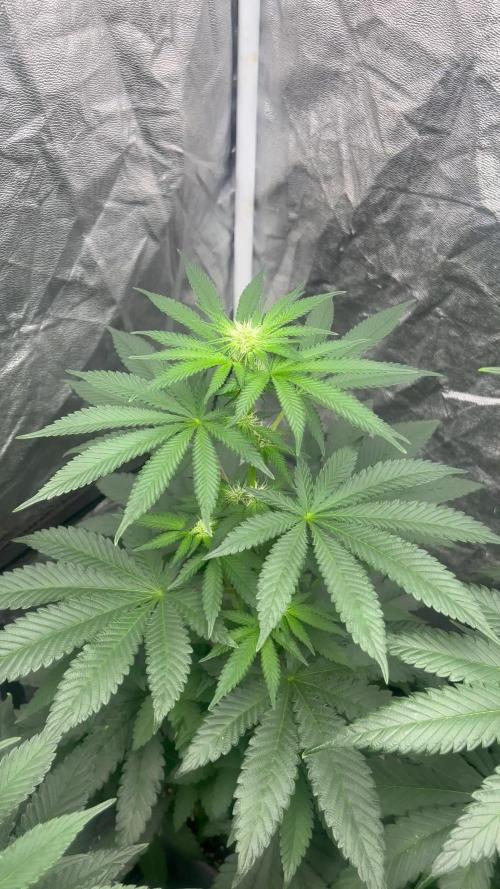
Que pasa familia, vamos con la tercera semana de floración de estas Mandarin Panties feminizadas de Seedstockers.
Vamos al lío, las plantas se trasplantaron a macetas de 7 litros.
El ph se controla en 6.5, la temperatura la tenemos entre 24/21 grados y la humedad ronda el 50%.
El ciclo de crecimiento puse 12h de luz, el foco está al 70% de potencia.
Me gustaría estar más encima este cultivo pero la salud me está impidiendo un poco este 100% con el proyecto. Con suerte la semana que viene andaré mejor.
- os dejo por aquí un CÓDIGO: Eldruida
Descuento para la tienda de MARS HYDRO.
https://www.mars-hydro.com
Hasta aquí todo, Buenos humos 💨💨💨


Likes
33
Share


@Master_weeda
Follow
Bonjour à tous les padawans et maîtres jedis
Pour cette semaine début du rinçage car les trichomes sont bien laiteux et commence à ambré
j'arrose donc avec 2 litres d'eau ph6.3
Je réitère à chaque fois que le pot est léger pendant une dizaine de jours
Une belle plante avec une forte odeur je me languis de la goûter elle sent vraiment très bon

Likes
12
Share


@cookingwithninja
Follow
day 42 images are in last week, I can not count XD. bridal is stacking a lot of weight and is constantly shifting/leaning every morning, good things. I would chop any day but I will wait it out. water, tiny bit of humic and folvic to reduce chloromine, chlorine- air stones
day 45 took a few nugs off on day 42, dried for 3 days. Tried bridal and blackberry. As a heavy recreational, thc is up there! bridal felt like having a blindfold over your eyes somewhat sativa uplift but heavy weight feelings. Very good. Lasted as good as 30%'s. Dr. Thunder was also very nice, nug was smaller so mixed with blackberry to have a small j. Also feels very good indica. Both trials were chopped on week 6 day 1. Very pleased with the results. I was worried bridal was more sativa; which charasteristica I am not looking for. So I believe this is a very good heavy hitter run with 4 plants. I can chop any day, but I am waiting for pink paradise to finish seeds.
day45 took top nugs from bridal party, blackberry oreo bigstuff and dr. thunder. No touching pink paradise!!
day 46 can chop anytime just waiting on pink paradise seeds to finish, bridal party leaning more
day 47 bridal leaning hard from weight.
day 48 stacking, day 48 video

Likes
19
Share


@adam_pawloski87
Follow
Let’s go Day 85 from seed !! This has been another great week ,ladies are coming close to the finish line an looking so beautiful!! This week we will continue flushing on these 3 ladies an jump em into there 48 hrs of darkness on Friday or Saturday will see ! Let’s have another great week ,, peace love an positive vibes to all y’all Keep them eyes peeled for next weeks update !! Cheers 😶🌫️💨💨💨💨💨🤙🏻


